An industrial paint brush must suit the coating, substrate, access problem and inspection standard—not merely carry an “industrial” label. By the end, you will have a practical way to compare brush construction, test application results, and determine whether a dealer can support repeatable work across projects and sites.
Key takeaways
- Match brush materials to the coating manufacturer’s PDS.
- Compare filament geometry, ferrule, handle and bristle retention.
- Choose brush size and shape for the surface and access.
- Test samples and verify stock, terms and delivery capacity.
Start With the Coating Manufacturer’s Application Requirements
Match the brush to the coating manufacturer’s product-data sheet, or PDS, rather than the generic industrial label. The PDS can specify natural or synthetic filament, thinner, reducer, cleaner, application temperature, viscosity and solvent resistance. Ask the dealer to identify the brush construction that meets those instructions.
- Use a paint brush selection method for epoxy that accounts for cure behaviour, and use a separate paint brush selection for polyurethane coating jobs. Confirm the two-component coatings pot life, then request trial quantities and disposable or replaceable brushes; cured material left in a brush can shed fragments into the next coat.
- Check recommendations for zinc-rich primer, enamel, alkyd, acrylic and water-based coatings. High-solids and metal-filled products can rapidly wear ordinary filament, so ask for a realistic service-life expectation.
- Require ferrule compatibility with the coating, reducer, immersion time and cleaner. A brush can survive the paint while staple corrosion, adhesive attack or handle degradation causes failure during storage or cleaning.
- Ask whether temperature and viscosity limits change the recommendation. Do not accept a broad solvent-resistance claim without the named chemical and exposure time.
The dealer should provide the current safety data sheet as well as the PDS. Brush compatibility does not replace ventilation, respiratory protection, skin protection, waste controls or hazardous-location ignition rules; confirm that metal components and cleaning products are permitted at your site.
Compare Bristle Materials, Filament Geometry and Brush Construction
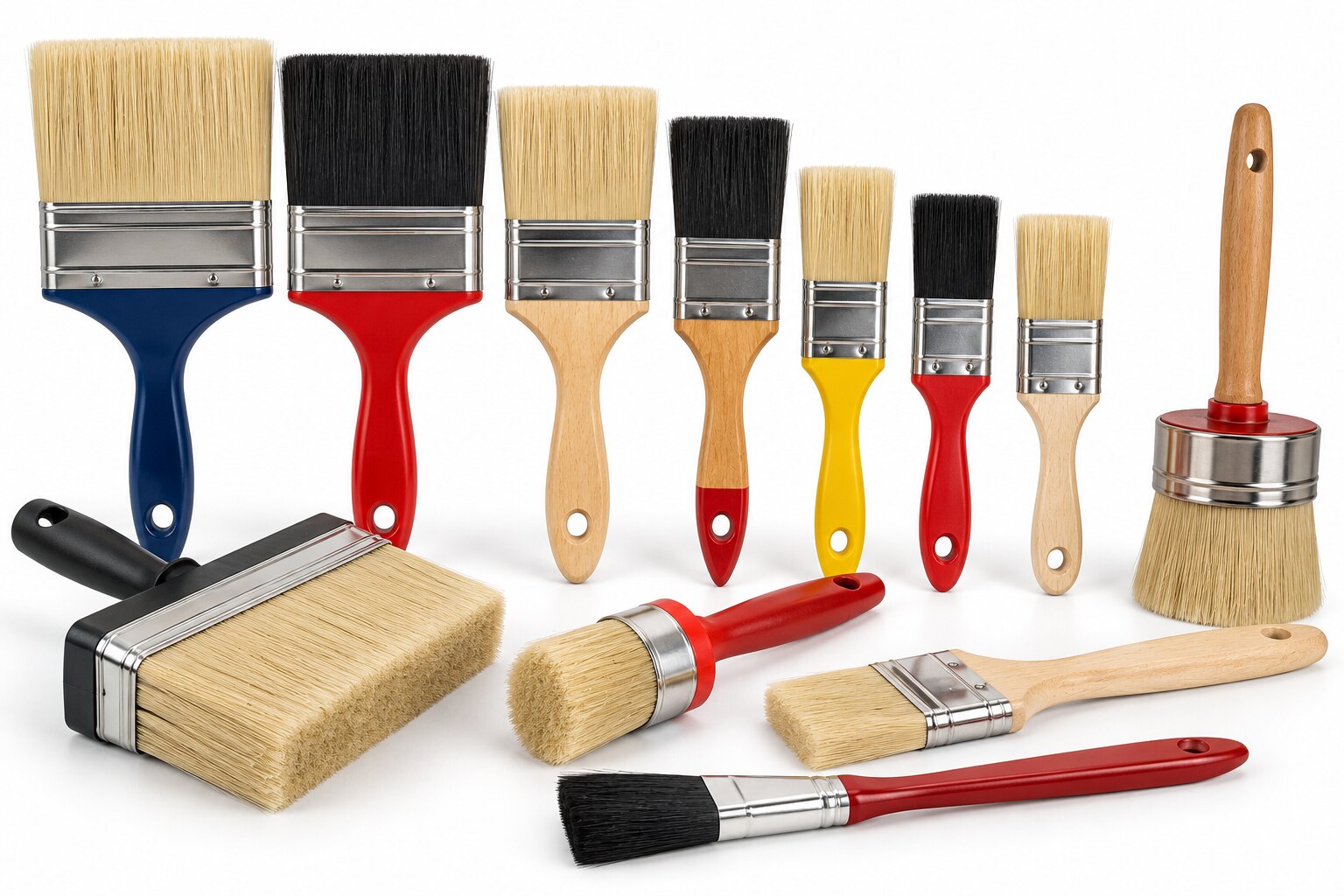
Choose bristle chemistry and trim for the coating, not by the word “industrial.” Synthetic filament suits waterborne work because nylon and polyester retain shape, while natural bristle absorbs water, swells and softens. Nylon filament paint brushes for water-based coatings differ from natural bristle solventborne paint brushes, which often provide strong paint pickup and layoff.
| Option | Pickup and finish | Service-life decision |
|---|---|---|
| Natural bristle | Excellent layoff and finish quality with many solventborne coatings; water reduces stiffness and edge control | Use only where the PDS permits it; swelling increases shedding risk |
| Synthetic filament | Nylon, polyester and blended brushes retain shape in waterborne coatings; tapered filament and flagged tips improve pickup | Choose the stiffness needed to push coating into corners without excessive filament loss |
| Abrasive-service filament | Higher stiffness resists high-solids coatings, abrasive coatings, metal-filled coatings and zinc-rich primers | Require a realistic replacement interval; ordinary filament can distort quickly |
Compare a wet-film result on the actual substrate, because a soft brush that feels good dry can leave poor coverage in profile valleys. Excessive flagging improves layoff but can reduce control.
Specify ferrule construction, staple materials and handle designs with the coating, reducer and cleaning solvent. Corrosion, adhesive attack, staple loosening or handle degradation can occur during storage even when clean bristles survive application. Ask the dealer to identify the trim specification, chemical compatibility and shedding controls, and reject samples showing early filament loss.
In flammable-liquid areas, confirm the brush against the site’s ignition-control rules rather than assuming a metal ferrule is acceptable.
Match Brush Size and Shape to the Surface and Work Area
Choose brush width, brush thickness, trim shape and filament length according to access and surface profile, not as one standard for the whole job. A large brush improves coverage, but it becomes clumsy around welds, corners and fittings; excessive pressure then reduces control and can produce uneven coating thickness.
| Work area | Recommended geometry | What it controls |
|---|---|---|
| Accessible steel structures and machinery | Flat brush for accessible steel structures and machinery; wider brush width and moderate brush thickness | Coverage across broad faces without sacrificing wet-film control |
| Weld seams and edges | Narrow angled brush for stripe coating weld seams and edges; short-to-medium filament length | Cutting-in precision, edge coverage and less paint on adjacent areas |
| Blast-cleaned rough surfaces | Short stiff filament with a firm trim shape | Pushes coating into profile valleys instead of bending over peaks |
| Pipes and tanks | Medium-width brush with a rounded or lightly chisel-shaped trim; flexible filament | Follows curvature while maintaining a consistent coating thickness |
| Corners and hard-to-reach surfaces | Narrow brush, reduced brush thickness and short filament length | Access and control where a wide head cannot turn or seat properly |
| Large accessible tank areas | Flat brush with long filament | Faster coverage, but check that the filament does not flood edges or sag |
Validate the choice on representative steel, including welds, edges and the actual blast profile. Measure wet film during application and dry-film thickness after curing; inspect for holidays and thin edge coverage. A brush that feels soft in the hand can still leave coating out of profile valleys, forcing rework.
Test Dealer Quality Before You Commit to Repeat Orders
A first sample can look acceptable and still hide lot-to-lot changes. Use this paint brush dealer quality checklist before approving repeat orders:
1. Inspect five brushes from the same shipment. Check for consistent trim, uniform filament length, a secure ferrule, straight handle alignment, intact packaging, correct labelling, and lot or batch identification. Pull the tips lightly to check filament shedding, then record the result for traceability.
2. Reject brushes with oil, silicone, dust, lint, crushed filaments, or opened protection. Contamination can cause fisheyes, craters, pinholes, and poor adhesion; define a rejection process for dirty, misshapen, or previously used tools.
3. Apply the candidate brush to representative steel, including welds, edges, and profile peaks, using the coating manufacturer’s product-data sheet. Measure dry-film thickness and rate appearance, holidays, edge coverage, pickup, layoff, and cleanup. Repeat the test with samples from a later lot.
4. Ask the dealer for a retained sample, written notice of construction changes, and a substitute approval process. For zinc-rich, metal-filled, or high-solids coatings, require a realistic service-life expectation; rapid filament wear can cost more through rework than a cheaper brush saves.
Goyals Industrial Hub is a Delhi industrial supplier option to assess against these criteria, not merely its catalogue range. Keep the approved sample, test record, lot or batch identification, and acceptance limits with the purchasing specification.
Verify Supply Capacity, Commercial Terms and Site Delivery
A dealer proves supply capacity by showing stock availability, lead time, minimum order quantity (MOQ), bulk pricing and replacement stock for each required brush. Ask whether repeatable sizes remain available across replenishment lots, and whether the dealer supports worksite delivery to multiple Delhi locations and delivery elsewhere in India.
A low price is irrelevant if one delayed shipment stops a coating crew.
Request these commitments in writing:
- Retain an approved sample from the sample evaluation and identify each shipment by lot or batch.
- Confirm specification continuity for filament blend, taper, flagging, ferrule dimensions and adhesive.
- Provide advance notice of changes and require your approval before supplying a substitute.
- State packaging and storage controls, rejection terms for contaminated or misshapen brushes, and the process for urgent replacement stock.
Check chemical and site controls before accepting a recommendation. Request the coating’s current safety data sheet and compatibility information for the reducer, cleaning solvent and immersion time; ferrule corrosion, staple loosening or adhesive attack can occur after the brush survives application.
For hazardous-location requirements, include the brush in the site’s ignition-control program rather than assuming a hand tool is safe. Confirm whether non-sparking tools are required. The brush does not replace respirator and ventilation responsibilities, skin protection or waste procedures for isocyanates, lead, chromates or solvents.
Frequently asked questions
What should you check before choosing an industrial paint brush dealer?
Give the dealer the coating manufacturer’s product-data sheet and confirm the brush matches its filament, thinner, reducer, cleaner, temperature and solvent-resistance instructions.
Which brush construction details matter for industrial painting?
Compare natural or synthetic bristles, filament geometry, ferrule attachment, handle strength and bristle retention against the coating and application method.
How do you choose the right industrial paint brush size?
Match brush width and shape to the surface, access space, edges, corners, welds, grooves and the amount of coating you need to control.
How can you test an industrial paint brush dealer before repeat orders?
Order samples, inspect construction and finish quality, test them with your coating, then verify stock consistency, commercial terms and site delivery performance.